
What it is
Decompression: space comes back, pressure comes off.
What Gravity Stretching is
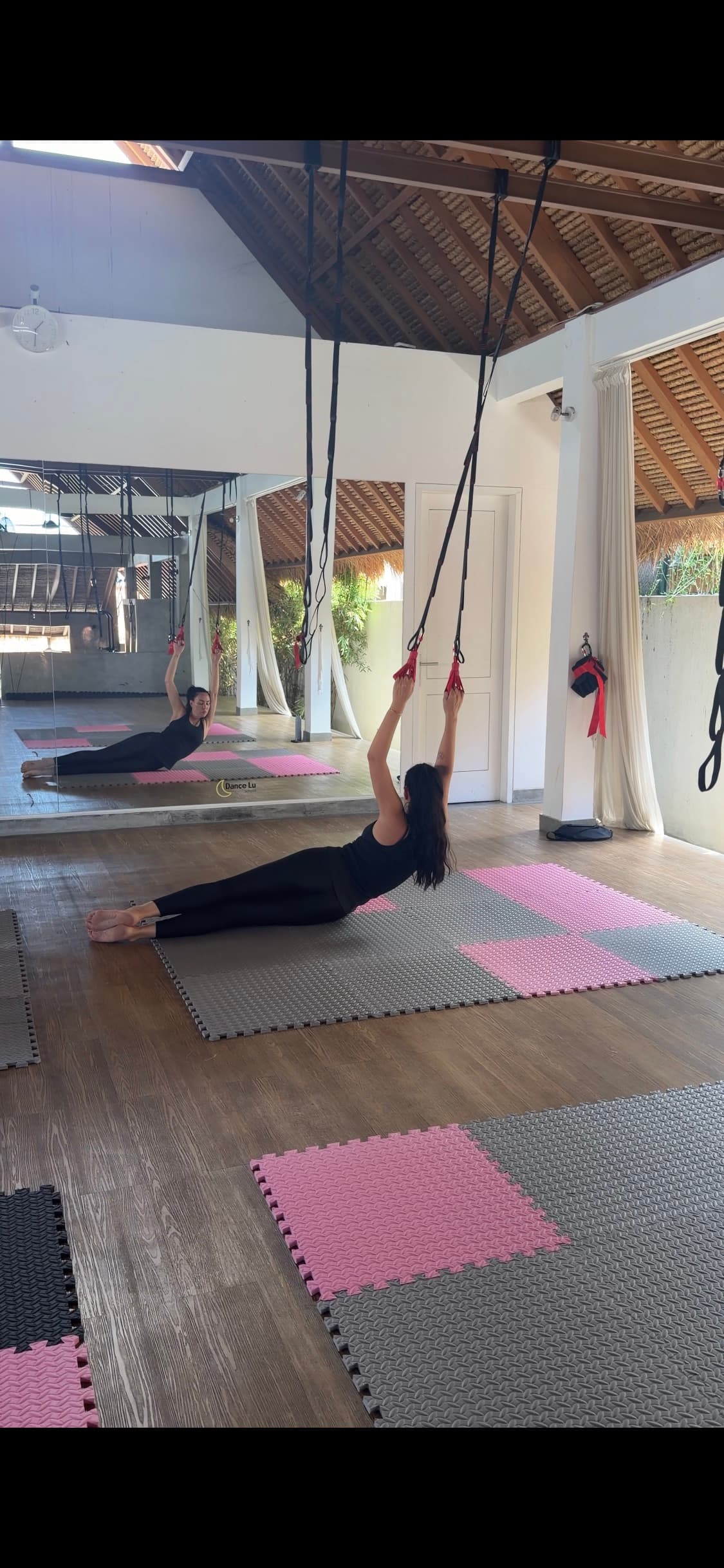
Gravity Stretching is a stretching method where you don't stretch yourself: you take a gentle hang on the lianas, holding on with your hands and feet, and while you relax and breathe, gravity does the work - the body decompresses, space comes back to the spine, pressure comes off. It is a wellness practice with seven levels, five of them open to anyone at any age, and most people feel lighter after the first class.
Everything about Gravity Stretching →Gravity Stretching is a gentle hang on the lianas. You hold on with your hands and feet and let the weight go. All day long gravity presses the body down. Here it does the opposite: the body decompresses - space comes back to the spine, pressure comes off, and the joints open.
This is not aerial yoga. There are no acrobatics and nothing is forced: we don't need to wear ourselves out, we need to make ourselves better. That is why most people feel lighter after the very first class.
- Eases tension and pressure in the lower back and neck
- Restores mobility in the hips, shoulders and spine
- Improves posture for desk and laptop life
- Supports recovery after long flights and long days
- Calms the nervous system through slow, breath-led work
What Gravity Stretching is not
Not aerial yoga
No poses to show and no acrobatics. In the lianas you don't perform anything: the body hangs and lets go.
See the comparison →Not a fabric hammock
Separate lianas for the hands and feet, not one wide cloth that wraps the whole body.
See the comparison →Not assisted stretching
Nobody stretches you with their hands, as at StretchLab or Stretch Zone. Gravity does the lengthening; the trainer guides.
See the comparison →Not medicine
We don't diagnose, we don't treat and we make no medical claims. Physiotherapy is for injuries and diagnoses. We're here for the ordinary body that got used to one load and stopped moving.
See the comparison →Not an inversion table
No frame, no ankle clamps, no fixed angle. A free hang by hands and feet, with seven levels to choose from.
See the comparison →Not yoga
In yoga you hold a pose with your own strength. Here there is nothing to hold: the weight comes off and the body lengthens by itself.
See the comparison →Not pilates
Pilates teaches control from the centre. Here the muscles finally get to stop working, and the spine gets its space back.
See the comparison →
Seven levels
Seven levels of practice. The first five are open to anyone, whatever your age or condition, and bring the body to its best. Levels six and seven are for when you already feel great and get curious how much further it can go.
First lightness
Short, gentle hangs where the body gets to know the lianas. The weight comes off the lower back, and it starts to feel lighter.
Opening
Little by little, the hips, shoulders and chest that got tight from sitting and screens start to open.
Mobility
The joints get their movement back. What felt stiff becomes smooth and easy.
Strength in length
In the lengthened position you learn to stay steady and active, and the deep muscles around the spine get stronger.
Flow
Hangs and stretches connect into longer sequences. The body moves freely, and the breath leads. The first five levels are open to anyone and bring the body into good shape.
Regeneration
A personal practice for lasting recovery - a way to undo the load of daily life whenever the body needs it. This is where the path continues once you already feel great.
The endless path
For those curious how much further it can go: two hands become one hand, one hand becomes one finger. The progress never runs out, and the sense of lightness keeps growing.
What you get, and how fast
There are no secrets here. This is what happens to the body, how soon you feel it and how much effort it takes.
- A body that feels light
- The body feels freer, the tension eases, and you leave lighter than you came in.
- You feel it the same day
- Not in a month and not at the end of a course, but on the day you first find yourself on the lianas.
- You just relax
- No strength needed, no flexibility, nothing to force. You relax in a gentle hang on the lianas, and gravity does the work.
- What the reviews say
- Lighter after the first class, and after about ten classes the feeling stays with you.
This is a wellness practice: we work with the tension and the mobility of the body.
FAQ
Is Gravity Stretching the same as aerial yoga?
No. Aerial yoga is about poses and acrobatics in fabric. In Gravity Stretching you take a gentle hang on the lianas, and the body decompresses - space comes back, pressure comes off, the joints open. The goal is recovery, not a performance.
Do I need to be flexible or fit to start?
No. The first level is gentle and fully supported. People of very different ages and fitness levels start there, and everyone moves at their own pace.
Can it help with back pain?
Many people come to Gravity Stretching with tension and stiffness from desk life and feel lighter quickly. It is a wellness practice: if you have a diagnosed condition, tell your trainer in advance and start with an individual session - we start gently, little by little.
How soon will I feel a difference?
Most people feel lighter after the first class. Pain usually eases by the 4th-6th class, and around 10 classes help the result stay with you.
What should I wear?
Comfortable, fitted clothing you can move and hang in. The studio has the lianas and mats.