
Can hanging fix posture?
Gravity Stretching Method Team
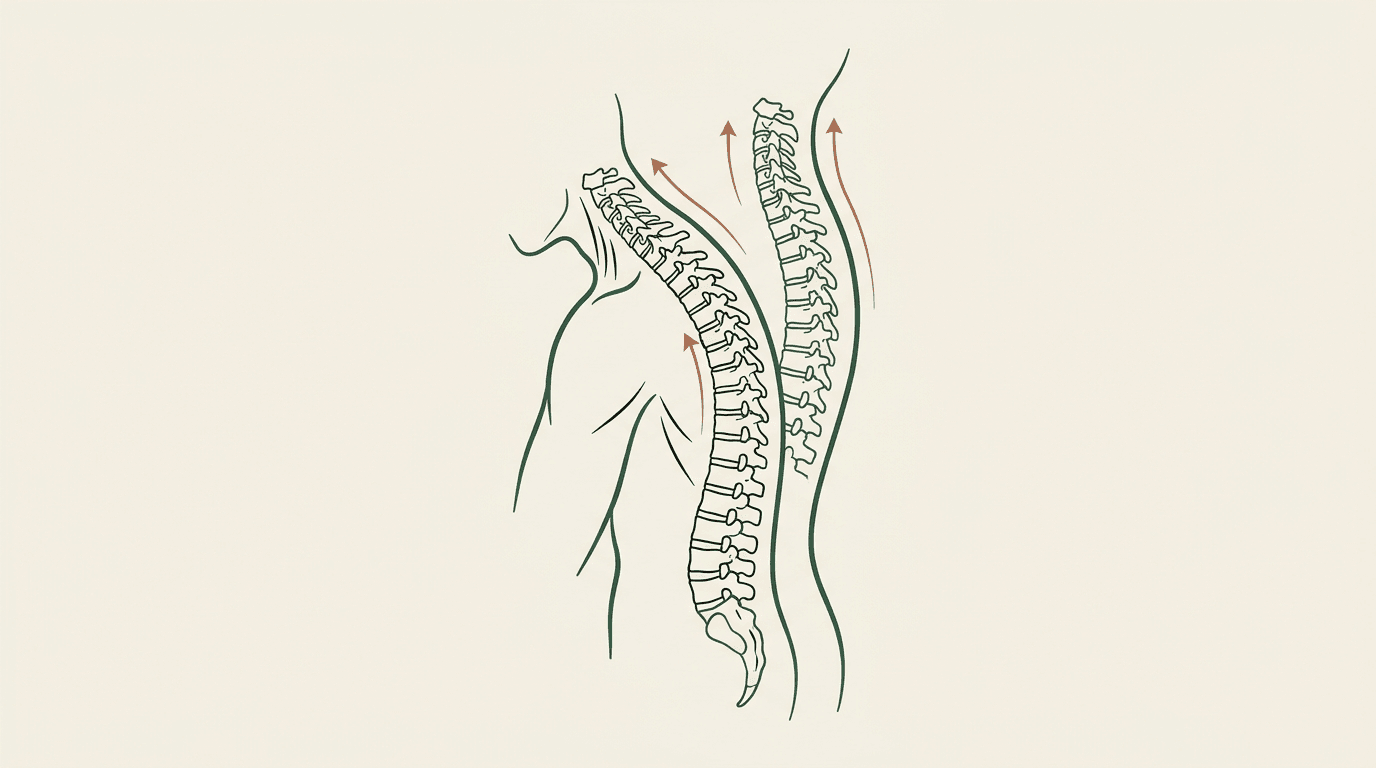
Can hanging fix posture? Mostly yes - but not the way most people picture it. Hanging can genuinely change posture; it just does not snap you straight in a week, and it is not about gritting your teeth and holding yourself upright all day. Hanging fixes posture the slow, honest way: it reverses the load that folded you forward in the first place, and lets the body relearn what length feels like. Round forward over a screen for years and the front of the body shortens while the back rounds over, and no amount of "sit up straight" fixes it - because by then the slump is not a choice you are making, it is the body's default shape. A hang works from the opposite direction.
So what does "fixing" posture even mean
Here is the part almost everyone gets wrong. Posture is not willpower. You can pull your shoulders back right now, hold them for a minute, and the second your mind wanders they roll forward again - because the muscles that should hold you tall have quietly switched off, and the ones that pull you forward have taken over the job. Fixing posture is not about forcing that upright position from morning to night. It is about changing the default the body keeps returning to on its own.
And a default only changes when the body is relaxed enough to let go of the old shape and settle into a new one. Never while you brace and grip and fight to look straight - that is just the slump with tension on top. The body got used to living under one constant load, and posture is the shape that load leaves behind. Change the load, calmly and often, and the shape follows.
How a hang gets in there
Hang from your hands and the whole front of the body finally gets to open. The shoulders stack back under the arms instead of curling forward, the ribs lift away from the pelvis, and the spine lengthens under its own weight - decompression of the body creates space and takes the pressure off. An intervertebral disc is like a kitchen sponge full of moisture: a day of sitting squeezes it flat, and a hang gives it room to soak the fluid back up.
Do this often enough and something quiet happens - the body remembers the feeling of length. After a good hang it wants to live straight, walk straight, move straight. That memory, repeated, is what real posture change is actually made of. Not a position you hold by force, but a shape the body starts choosing for itself. And it is never only the upper back - when the spine gets room, the whole body unwinds, so it is easier to stand tall everywhere, not just in the one spot that rounds.
Why hanging by itself often disappoints
So if a hang is that good, why do so many people try it and give up? Usually it is the bar. Grip gives out in twenty or thirty seconds - long before the shoulders and spine have had time to release - and while you fight to hold on, the shoulders creep back toward the ears and the whole upper body braces hard. That is the exact tension you were trying to undo. The nervous system reads all that effort as danger and keeps standing guard, and a guarded muscle never lets go.
You end up with a short, strenuous workout, when posture wanted the opposite: length, held long and calm enough to become the new normal. So hanging can fix posture - but only the version of hanging where the body is actually allowed to relax. On a pull-up bar, the grip runs out before the letting-go can begin.
What realistic change looks like
Be honest with yourself about the timeline and you will not quit too early. You often feel lighter and taller after the very first session - that part is quick and real. But a default that took years to build does not rewrite itself overnight; a stable change usually settles in around ten sessions, and regularity matters far more than intensity. This is not a no-pain-no-gain project. We are not here to exhaust the body - we are here to improve it, gently, so it keeps the change instead of springing back.
If you cannot fold into a tall, open posture yet, the word to hold on to is "yet." The body learns length the same way it learned the slump: a little at a time, repeated, until it quietly becomes who you are.
How Gravity Stretching helps
Gravity Stretching is this hang turned into a calm, guided practice - a therapy of gentle decompression. On the lianas, with leg straps and finger loops carrying your weight, grip stops being the limit: you can stay open in the hang for minutes, breathing slowly, while the chest, shoulders and spine unwind. Relaxation instead of effort - the stretch works while you rest inside it, and a trainer stays beside you, so the lianas carry all of your weight and nothing to force. We start small, three seconds at a time, and we work with the whole body, not just the rounded upper back, so it is not only your posture that feels easier - the whole body does.
Relief is usually felt after the very first session, and a stable change settles in around ten - regularity beats intensity every time. If years at a desk have folded you forward, give your body the version of hanging where it can finally let go and relearn how to stand tall: find a studio near you, or - if your city does not have one yet - vote for your city, and we will know where to open next.
Part of our guide on Rounded posture
Feel it for yourself at a Gravity Stretching studio
General wellness information. Listen to your body: if a pain is sharp or shooting, do not force it - tell your trainer in advance and start even softer.
Related questions
People also ask
Ask your question
Describe what you feel. We answer real questions from people around the world.